
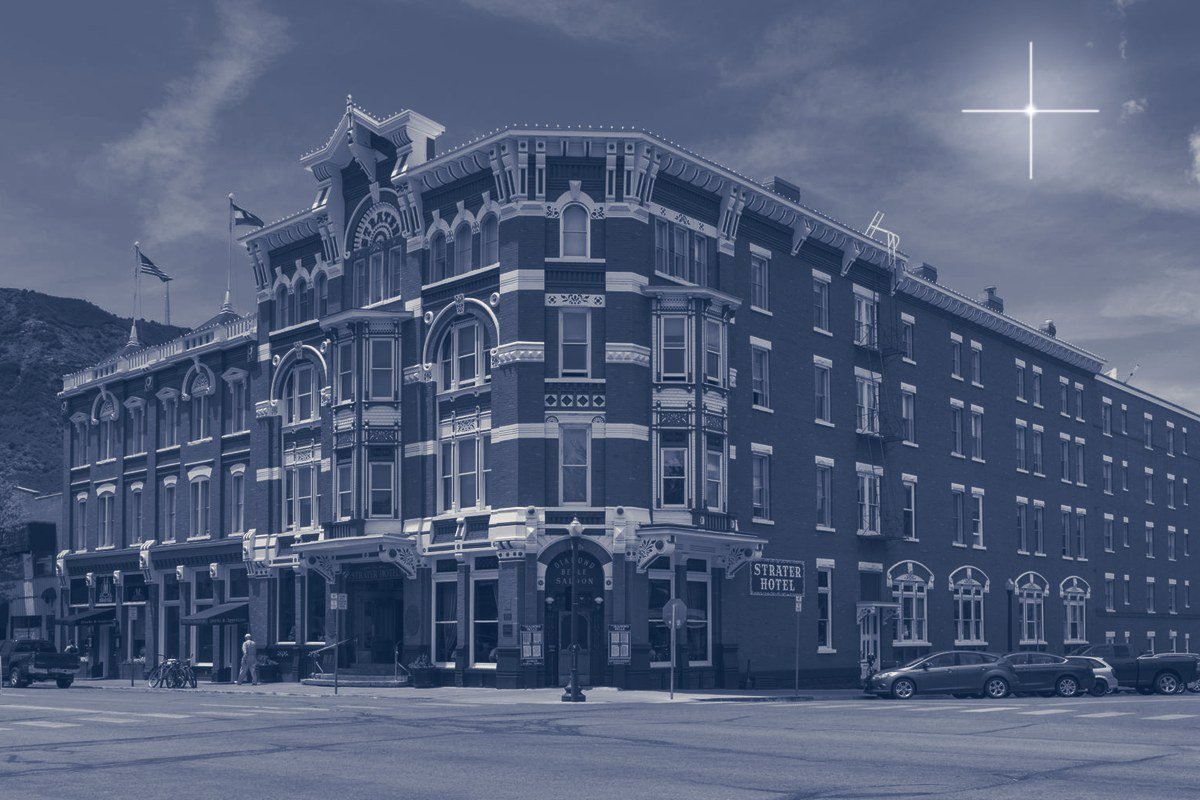
A Durango outfitter who runs fall elk hunts opens a notice of deficiency in October: $38,000 of additional 2024 income tax, plus a penalty. She wants to fight it in the U.S. Tax Court, and the petition asks something unexpected. Where should the trial be held? Her instinct says Denver, about 335 road miles away. Albuquerque is more than a hundred miles closer.
The Tax Court reworked its trial locations on September 8, 2026. For a La Plata or Montezuma County taxpayer, the city, the small-or-regular choice and a remote trial now get weighed together, before filing.
Where is a Colorado Tax Court case tried, and do I have to choose Denver?
Denver is Colorado’s only Tax Court place of trial. The court’s places of trial list puts the courtroom in the Byron Rogers Federal Building, 1961 Stout Street, Room C502. Albuquerque and Salt Lake City are places of trial too, with “no permanent courtroom.”
Under Tax Court Rule 140(a), a petitioner files a separate request for place of trial with the petition. On paper that is Form 5, revised in September 2026: “You may choose any location that is convenient to you.” Residence does not limit the choice. In DAWSON, the court’s e-filing system, it is step 4 of the petition process, “Case Procedure and Trial Location,” with a city dropdown.
All of this happens inside the 90 days after the notice is mailed under 26 U.S.C. § 6213(a); a related post covers a missed Tax Court 90-day deadline in Colorado. The city can change later. Rule 140(b) allows a motion to change the place of trial “stating fully the reasons therefor,” but one filed after the notice setting the case for trial “may be deemed dilatory” unless the reason arose later or there was good reason to wait.
What changed in the Tax Court trial locations in 2026?
The September 8, 2026 announcement added Austin, Charlotte, Newark, Orlando and Sacramento, “bringing the total to 79.” It also opened every city to regular cases, which “eliminates the restriction on certain trial locations, which could be designated solely for small tax cases.” The announcement does not name those cities, and the court’s definitions page still says S-case trials are held in “several additional cities.”
The change I would watch is the pilot. Beginning “no earlier than for the Fall 2027 term,” the court may put cases on a “reporting calendar.” Instead of a trial date, it “will assign a judge and issue a standing scheduling order governing pretrial proceedings,” with trial dates set “if necessary.” Traditional calendars continue.
Can a Durango or Cortez taxpayer be tried in Albuquerque or Salt Lake City?
Yes. By my estimates from OpenStreetMap routing (not court figures), Durango is about 216 road miles from Albuquerque and 335 from the Denver courthouse. Cortez is roughly 253 from Albuquerque, 348 from Salt Lake City and 379 from Denver. Western Slope readers should not assume Utah wins: Grand Junction and Montrose are both closer to Denver than to Salt Lake City.
Frequency matters as much as miles. Across the five posted terms, Fall 2025 through Winter 2027, Albuquerque has one session, the week of May 4, 2026. Salt Lake City has three. Denver has five, including a November 2025 session canceled in the government shutdown. A city that rarely sits can mean a longer wait for trial.
The trial city does not move your appeal. Under 26 U.S.C. § 7482(b)(1)(A), an individual appeals in the circuit of legal residence, fixed when the petition is filed, so a Coloradan goes to the Tenth Circuit (New Mexico and Utah sit there anyway under 28 U.S.C. § 41). The Tax Court therefore applies Tenth Circuit law. Golsen v. Commissioner, 54 T.C. 742 (1970), aff’d, 445 F.2d 985 (10th Cir. 1971), follows an appellate decision “squarely in point where appeal from our decision lies to that Court of Appeals.” Golsen itself applied a Tenth Circuit decision.
Tax Court Petition Due Soon? Contact Us Now
Should a Colorado taxpayer elect a small tax case under $50,000?
26 U.S.C. § 7463(a) allows small tax case procedure when the disputed deficiency stays within “$50,000 for any one taxable year” for income tax, and § 7463(e) counts penalties and additions to tax. Rules 170 through 174 supply the procedure; under Rule 174(b) trials run “as informally as possible.” Rule 172 lets a petitioner appear alone or with any admitted practitioner, such as a Colorado Tax Court attorney.
The price is finality. An S decision “shall not be reviewed in any other court” and “shall not be treated as a precedent for any other case,” per § 7463(b). The IRS cannot appeal your win either.
You elect by checking the small-case box on the petition form or in DAWSON; leave it blank and the case is regular. Rule 171(c) permits a request any time before trial, and the IRS may oppose. Leaving is harder. Before trial, Rule 171(d) lets the court remove the designation on its own or on motion; afterward, § 7463(d) allows discontinuance only on reasonable grounds to believe the amount exceeds the limit.
Think twice when the case turns on law rather than receipts. Favorable Tenth Circuit precedent does its work through Golsen in a regular case, and an open question can be won on appeal only in a regular case. I see S cases fit best where the fight is substantiation: mileage logs, cash receipts, who paid for what.
When does the Tax Court grant a remote trial?
The court holds trials and hearings by Zoomgov under the same rules of decorum, and recording is prohibited. A party asks by filing a Motion to Proceed Remotely, due 31 days before the session under the court’s sample standing pretrial order.
I have not found a published standard for granting it. The form shows what the judge weighs: reasons such as “distance from Courthouse, job/ caregiver constraints, health concerns,” whether everyone has a camera-equipped computer, and whether the other side objects. Each term also lists dedicated remote sessions, in Winter 2027 the weeks of March 8 (small) and March 22 (regular). Still, when credibility is the whole case or the judge needs original logbooks, the drive can be worth it.
What happens at a Tax Court Denver trial session?
The court’s trial session schedules show Denver sessions the weeks of February 2, April 6 (a swing session with Cheyenne) and June 15, 2026, none in Fall 2026, and a regular calendar the week of February 8, 2027. Spring 2027 was not posted when I checked on October 16, 2026.
Under Rule 131(b), the trial notice comes with a standing pretrial order. The sample order counts back from opening day: pretrial memoranda at 21 days and the stipulation of facts at 14, with continuances sought by day 31 and granted “only in exceptional circumstances.” An expert’s report in a regular case needs a motion for leave 30 days out; a related post covers expert witnesses at the Denver trial session.
Rule 91(a) requires stipulation “to the fullest extent to which complete or qualified agreement can or fairly should be reached.” I treat that stipulation as where the case gets built. The session opens with the calendar call under Rule 131(c), normally on Monday, when parties estimate trial time and cases are then tried “in due course, but not necessarily in the order listed.”
Illustrative example (hypothetical facts): the outfitter’s notice shows a $38,000 deficiency plus a $7,600 accuracy-related penalty, 20 percent under 26 U.S.C. § 6662(a). With $45,600 in dispute for one year, an S case is available. Most of it is documented camp and livestock expenses; one smaller item turns on how a multi-year federal permit fee is deducted. An S case in Albuquerque saves about 120 miles each way, but it is final, and that city sat once in five terms. A regular case in Denver keeps a Tenth Circuit appeal. A remote motion saves the drive but puts her credibility on a screen. If the permit-fee point will recur, I would lean regular; if the fight is receipts, an S case with a remote request deserves a hard look.
| Option | Miles from Durango | Posted sessions, Fall 2025 to Winter 2027 | Appeal | Fits best when |
|---|---|---|---|---|
| S case, Albuquerque | About 216 | One | None; not precedent | The dispute is documents and receipts |
| Regular case, Denver | About 335 | Five, one canceled | Tenth Circuit | A legal question is worth preserving |
| Either procedure, Salt Lake City | About 393 (348 from Cortez) | Three | Tenth Circuit if regular | A Cortez filer wants to avoid Denver |
| Remote (Zoomgov) | None | Remote sessions each term | Follows the procedure elected | Distance or a busy season |
Frequently Asked Questions
Do I have to live near the city I choose for my Tax Court trial?
No. Form 5 says you may choose any location that is convenient to you. Your appeal still follows your legal residence.
Can I change my Tax Court place of trial after filing?
Yes, by a Rule 140(b) motion that states your reasons fully. File it before the notice setting the case for trial if you can, because a later motion may be treated as dilatory.
Does the $50,000 small tax case limit include penalties?
Yes. Section 7463(e) counts penalties and additions to tax as part of the deficiency in dispute, and for income tax the limit applies per taxable year.
Can the IRS appeal if I win a small tax case?
No. A decision under § 7463 cannot be reviewed in any other court, so neither side can appeal, and it is not precedent for other cases.
When does the Tax Court reporting calendar pilot start?
No earlier than the Fall 2027 term. Those cases get an assigned judge and a standing scheduling order instead of a trial date.
If my Colorado case is tried in Salt Lake City, which court hears the appeal?
The Tenth Circuit, because § 7482(b)(1)(A) looks to legal residence when the petition is filed. The trial city does not control it.
How North Star Law Firm Can Help
North Star Law Firm represents Colorado taxpayers and their businesses in Tax Court litigation, IRS audit defense, penalty abatement, and IRS Appeals. Phillip Zagotti, JD/CPA, is admitted to the U.S. Tax Court and to the U.S. District Court and U.S. Bankruptcy Court for the District of Colorado. Phillip Zagotti is not licensed by the Colorado Supreme Court; for Colorado state-law questions the firm works alongside Colorado-licensed counsel.
The city and the S-or-regular choice are made in the petition, inside the 90-day window. If a notice of deficiency just reached you in southwest Colorado, contact North Star Law Firm.