
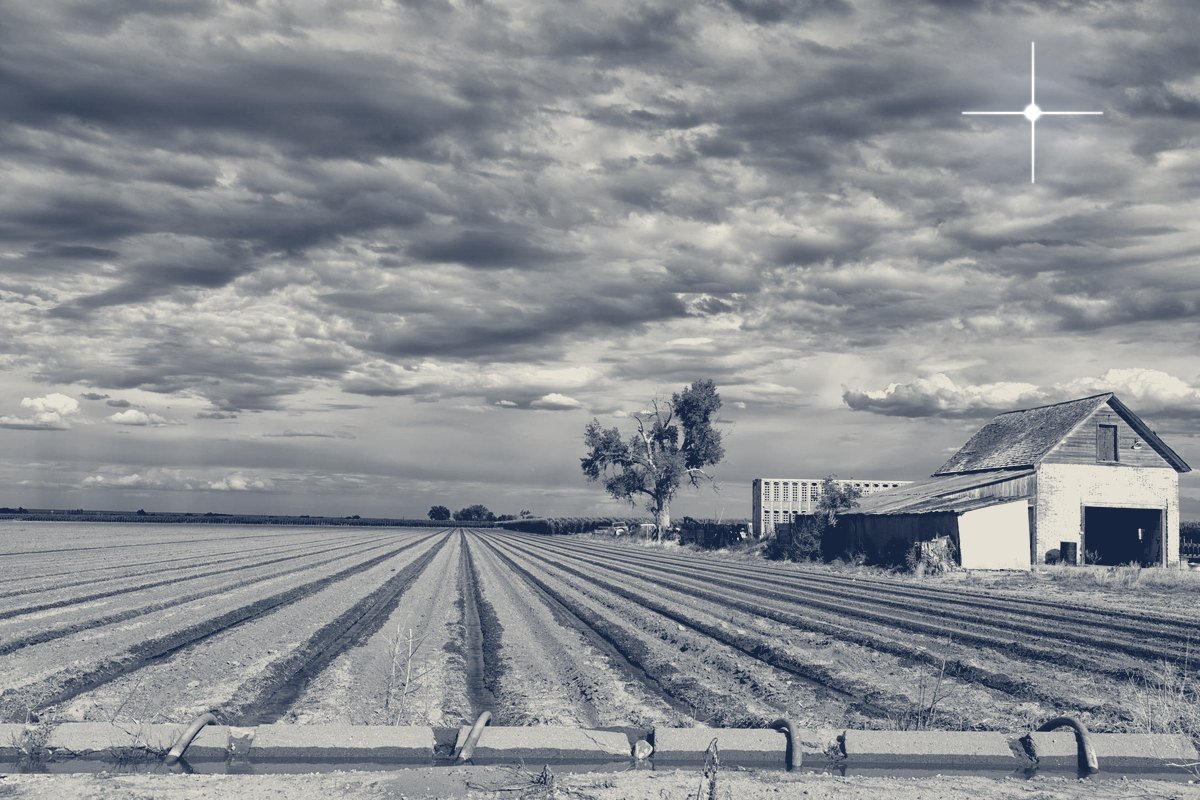
Picture a potato grower outside Center farming ground his family bought in the late 1990s. With the operating line tapped out, his exit is selling two quarter-sections. NASS counted 10.80 million hundredweight of Colorado potatoes in storage on February 1, 2025, and russet varieties covered 89.3 percent of reported San Luis Valley potato acres in 2023. Here, Chapter 12 bankruptcy in Colorado often beats Chapter 11, largely because of the tax bill.
Most bankruptcy chapters make the farmer pay the capital gains tax on that sale in full. A 2017 statute makes Chapter 12 the exception.
Who qualifies as a Colorado family farmer for Chapter 12?
Under 11 U.S.C. § 101(18), an individual or married couple qualifies if debts are under the cap, at least half of the noncontingent, liquidated debts come from farming, and more than half of gross income came from farming in the prior tax year or in each of the second and third years before filing. The Family Farmer Relief Act of 2019, Pub. L. 116-51, set the cap at $10,000,000, and 90 Fed. Reg. 8941 (Feb. 4, 2025) raised it to $12,562,250 from April 1, 2025. Family fishermen (§ 101(19A)) face a $2,568,000 cap. In re Mongeau, 633 B.R. 387 (Bankr. D. Kan. 2021), decided inside the Tenth Circuit, held a couple who wound down before filing still eligible.
Per the U.S. Trustee Program’s trustee list, Colorado has no standing Chapter 12 trustee; one is assigned case by case through the Denver office. Colorado opts out of the federal exemptions (C.R.S. § 13-54-107), so a farm residence falls under the C.R.S. § 38-41-201 homestead exemption ($250,000, or $350,000 for an elderly or disabled owner, spouse, or dependent), and C.R.S. § 13-54-102(1)(g) shields up to $100,000 of livestock, crops, and machinery per couple when agriculture is the principal occupation.
Why can a Chapter 12 farmer sell land over an undersecured lender’s objection?
In Chapter 11 and its Subchapter V, a sale under 11 U.S.C. § 363(b) strips liens only if a § 363(f) condition is met. The usual route, § 363(f)(3), asks whether the price exceeds “the aggregate value of all liens.” Clear Channel Outdoor, Inc. v. Knupfer (In re PW, LLC), 391 B.R. 25 (B.A.P. 9th Cir. 2008), measured that against the liens’ face amount. On that reading, a lender owed $2.5 million on land bringing $2.4 million can block it.
Section 1206 permits, “in addition to” § 363(f), a sale of “farmland, farm equipment, or property used to carry out a commercial fishing operation” free and clear, with the lien attaching to proceeds. The farmer exercises that power as debtor in possession under § 1203, and because it remains a § 363(b) sale, the lender keeps its § 363(k) credit bid unless limited for cause.
What can a Chapter 12 plan sale under section 1222(b)(8) add?
Section 1222(b)(8) lets the plan “provide for the sale of all or any part of the property of the estate.” Chapter 11 relies on § 1123(b)(4) and the cramdown sale in § 1129(b)(2)(A)(ii), which Subchapter V imports through § 1191(c)(1) even though § 1181(a) disables § 1129(b). In re Ditech Holding Corp., 606 B.R. 544 (Bankr. S.D.N.Y. 2019), called § 363(f) relief “narrower than that afforded to a debtor under a confirmed plan.”
The plan is the negotiating table: a lender eager for a sale may let the family keep the home quarter or sell after harvest. Secured claims are protected by § 1225(a)(5). The plan is due in 90 days under § 1221, and § 1224 wants confirmation heard within 45 days after that.
How does section 1232 change capital gains tax on selling farmland in bankruptcy?
In Hall v. United States, 566 U.S. 506 (2012), a 5 to 4 Court held that about $29,000 of tax on a farm sold mid-case was not “incurred by the estate” under § 503(b), because a Chapter 12 estate is not a separate taxpayer under 26 U.S.C. § 1399. The plan could neither pay nor discharge it.
Section 1005 of Division B of Pub. L. 115-72 (Oct. 26, 2017) added 11 U.S.C. § 1232. It covers “any unsecured claim of a governmental unit” arising before the petition, or after it and before discharge, “as a result of the sale, transfer, exchange, or other disposition of any property used in the debtor’s farming operation.” That claim is treated as prepetition and unsecured, loses priority under § 507, must be provided for in the plan, and is discharged under § 1228. It is not limited to capital gains, so equipment recapture appears covered, though ground leased to a neighbor may not count.
Section 1232(b) runs the liquidation test as if the claim were ordinary prepetition debt, and § 1232(c) lifts the § 523(a)(1)(A) and (B) discharge exceptions. Under § 1232(d), a farmer filing a postpetition return serves it and the claim calculation on the taxing authority, which has 180 days to file a claim; after that the debtor may file one the government cannot amend.
How is the 1232 claim computed, and does it reach Colorado income tax?
The statute is silent on the math, and IRM 5.9.9.10.3 sends caseworkers to Area Counsel. The leading case is Colorado’s. In In re Ficken, 430 B.R. 663 (B.A.P. 10th Cir. 2010), after eastern Colorado ranchers sold cattle under their plan, the panel endorsed the marginal method: prepare the real return, then a pro forma return without the qualifying sales, and protect the difference. Knudsen v. IRS, 581 F.3d 696 (8th Cir. 2009), agreed. Both construed the old § 1222(a)(2)(A), and Hall overtook Ficken on postpetition sales, so using the method under § 1232 is a strong argument, not settled law.
Section 101(27) defines “governmental unit” to include a State and its departments, so the Colorado Department of Revenue’s claim on the same gain should be treated the same way. Colorado’s C.R.S. § 39-22-518 capital gain subtraction survives for Schedule F filers selling assessor-classified agricultural land acquired from May 9, 1994 through June 3, 2009 and held five years, capped at $100,000 yearly. But a qualified taxpayer cannot have overdue state tax liabilities, which include uncollectible ones “resulting from bankruptcy.”
What does the math look like for a San Luis Valley potato operation?
Hypothetical. A married couple farming as sole proprietors near Center owe $3.2 million, $2.5 million of it to their operating lender. They bought 320 acres in 1998 for $400,000 and have a $2.4 million buyer, a gain of about $2,000,000. Federal tax at 20 percent is roughly $400,000 (simplified; active farm gain escapes the 3.8 percent tax under 26 U.S.C. § 1411(c)(1)(A)(iii)). After the $100,000 subtraction, Colorado’s 4.4 percent rate in C.R.S. § 39-22-104(1.7)(c) yields $83,600.
Under § 1206 the sale closes anyway. Say $200,000 of the lender’s claim ends up unsecured, next to $400,000 owed to vendors. Section 1232 adds the $400,000 federal claim and, on the text, the $83,600 state claim, for a pool of about $1,083,600. If the plan pays that pool $180,000 from disposable income, each creditor gets about 16.6 cents: roughly $66,400 to the IRS and $13,900 to the state. The balance is discharged.
The couple also fits under the $3,424,000 Subchapter V limit in § 101(51D), but an individual’s Chapter 11 estate is a separate taxpayer under 26 U.S.C. § 1398, so tax on a postpetition sale is a § 507(a)(2) administrative expense, payable in full on the effective date under § 1129(a)(9)(A) or across a nonconsensual plan under § 1191(e). A sale the year before filing creates a § 507(a)(8) priority claim, also paid in full. About $483,600 gets paid either way, if PW did not block the sale.
Selling Farm Assets Under Pressure? Contact Us Now
| Feature | § 363 sale (Ch. 11 / Sub V) | § 1206 sale (Ch. 12) | Plan sale (Ch. 11 / Sub V) | Plan sale (Ch. 12) |
|---|---|---|---|---|
| Free and clear over objecting lienholder | Only under § 363(f); PW limits (f)(3) | Yes; lien moves to proceeds | Yes, § 1129(b)(2)(A)(ii) | Yes, § 1222(b)(8) with § 1225(a)(5) |
| Credit bid | Yes, § 363(k) | Yes, § 363(k) | Yes, § 363(k) | No express provision |
| Tax on gain | Paid in full as priority | § 1232: pro rata, dischargeable | Paid in full as priority | § 1232: pro rata, dischargeable |
| Timing | Motion; can close early | Motion; can close early | At confirmation | Plan in 90 days |
| Bargaining room | Sale terms only | Sale terms only | Claim treatment and proceeds | Retained acres, timing, carve-outs |
Frequently Asked Questions
Can a Colorado farmer file Chapter 12 after selling off most of the equipment?
Sometimes. In In re Mongeau, a Kansas bankruptcy court found a couple who had sold most of their farm assets still eligible.
What is the Chapter 12 debt limit for a family farmer?
For cases filed since April 1, 2025, aggregate debts cannot exceed $12,562,250 under 11 U.S.C. § 101(18).
Does section 1232 cover a farmland sale made after filing?
Yes. It reaches tax claims arising after the petition and before discharge, the gap Hall v. United States exposed.
What happens to the section 1232 claim if the case is dismissed?
The claim is discharged only under section 1228, so a dismissal leaves the full tax owed.
Can the operating lender block a Chapter 12 sale of farmland?
Not by withholding consent, because section 1206 permits a free-and-clear sale with the lien moving to the proceeds, though the lender may still credit bid.
Is the Colorado Department of Revenue’s claim covered by section 1232?
The text reaches any governmental unit, which includes a State, but no controlling Tenth Circuit ruling was located, so the plan should name the state claim.
How North Star Law Firm Can Help
North Star Law Firm handles Colorado bankruptcy filings for farm and ranch families and the tax side of a land sale, including how farm-sale taxes and older IRS balances are discharged in bankruptcy, when Subchapter V fits better, and the Colorado Department of Revenue side. Phillip Zagotti, JD/CPA, is admitted to the U.S. Tax Court and to the U.S. District Court and U.S. Bankruptcy Court for the District of Colorado. Phillip Zagotti is not licensed by the Colorado Supreme Court; for Colorado state-law questions the firm works alongside Colorado-licensed counsel.
Decisions made before a listing is signed fix most of the tax result. To review a Chapter 12 filing or a planned sale, contact North Star Law Firm.