
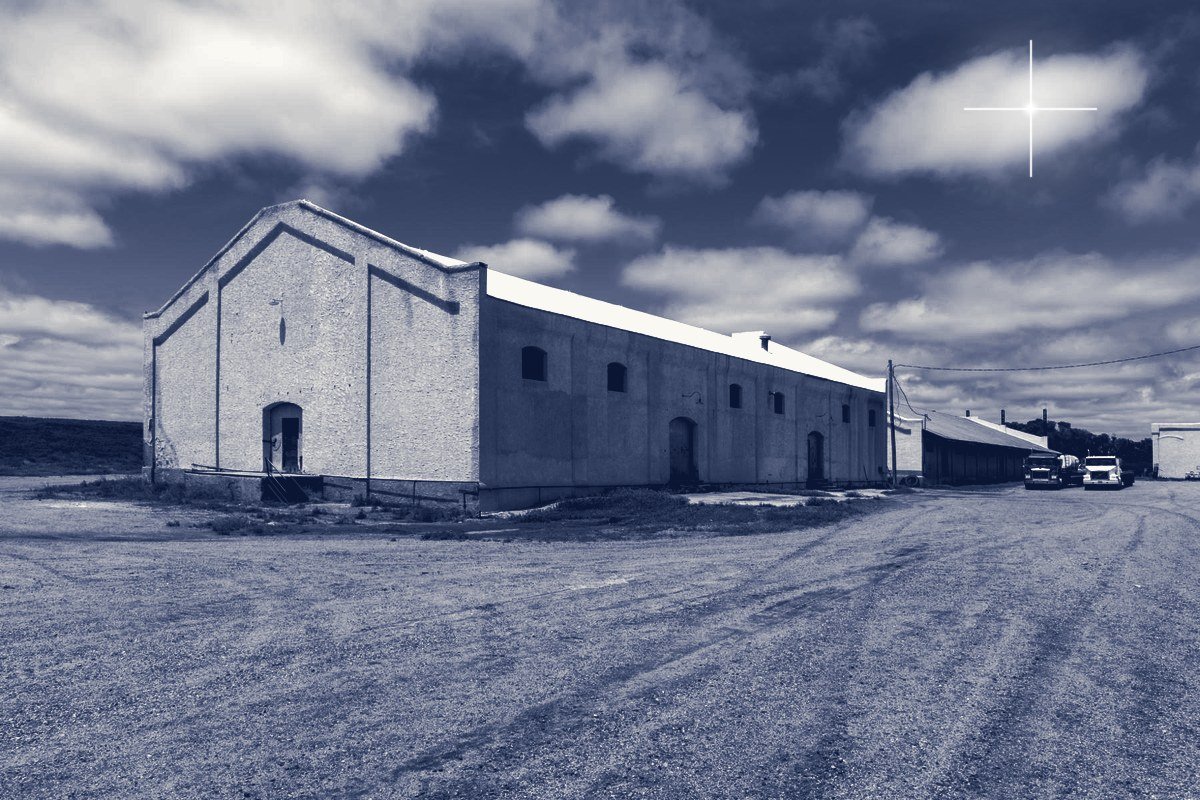
Ingrid runs a precision machine shop in Loveland that makes hydraulic valve bodies for a Front Range equipment maker. On Thursday, October 1, 2026, the maker filed a Subchapter V case in the U.S. Bankruptcy Court for the District of Colorado. It owes her $146,000 on four invoices, and by afternoon its buyer was asking whether the next order could ship on net-30, adding that she might be a “critical vendor.” (Ingrid and her numbers are illustrative.)
Each invoice now has a different value, and some deadlines run in days. Here is how I sort a supplier’s rights, in the order the clock runs.
My customer filed Chapter 11 in Colorado. What can I do the day after?
11 U.S.C. § 362(a)(6) stays “any act to collect, assess, or recover a claim against the debtor that arose before the commencement of the case.” No more past-due calls, and no holding a new order hostage to the old balance.
The stay does not make you a lender. Unless a contract obligates you to sell on credit, you can demand cash in advance on new orders. Anything you deliver after the filing on terms is an administrative expense under § 503(b)(1)(A), payable in the ordinary course under § 363(c)(1).
A written supply agreement is usually an executory contract the debtor may assume or reject under § 365(a), and § 365(e)(1) bars ending it under a clause triggered by the filing. If the debtor assumes it, § 365(b)(1) requires a cure of your defaults. Read yours before refusing an order.
Is my unpaid invoice a section 503(b)(9) claim?
Part of it may be. Section 503(b)(9) gives administrative priority to “the value of any goods received by the debtor within 20 days before the date of commencement of a case,” if sold in the ordinary course of the debtor’s business. That ranks second under § 507(a)(2), ahead of all general unsecured creditors.
The statute says goods. A Western Slope trucking company sells a service, and in In re Goody’s Family Clothing, Inc., 401 B.R. 131 (Bankr. D. Del. 2009), a vendor that inspected and ticketed apparel got no priority. And “received” means physical possession: in In re World Imports, Ltd., 862 F.3d 338 (3d Cir. 2017), furniture shipped from China more than 20 days before the filing but delivered inside the window qualified. The court used the UCC definition, which Colorado enacted in C.R.S. § 4-2-103(1)(c). I found no Tenth Circuit or BAP decision on point; a Colorado judge would likely start from the same text. Keep your delivery receipts.
Priority is not prompt payment. Chapter 11 normally requires cash on the effective date under § 1129(a)(9)(A), but § 1191(e) lets a nonconsensual Subchapter V plan pay administrative claims over its term. Official Form 410 is not for administrative expenses, so request 503(b)(9) payment separately under § 503(a).
Can I still reclaim the goods under section 546(c)?
Under C.R.S. § 4-2-702(2), a seller that discovers the buyer received goods on credit while insolvent may reclaim them on demand within ten days after receipt. Section 546(c)(1) carries that right into bankruptcy for goods received while insolvent within 45 days before the filing, if the written demand comes within 45 days after receipt or, when that period ends after the filing, within 20 days after the case began. I calendar the earlier date.
The right is “subject to the prior rights of a holder of a security interest in such goods or the proceeds thereof.” Most operating companies owe a bank with a blanket inventory lien, so reclamation rarely recovers much. Send the demand anyway. If you miss it, § 546(c)(2) preserves the 503(b)(9) claim.
Customer Filed Bankruptcy and Owes You? Contact Us Now
What does a critical vendor letter in a Colorado bankruptcy actually mean?
The debtor wants to pay some old invoices now, ahead of other creditors, if you keep supplying. The Code never says so; debtors cite § 363(b)(1) and § 105(a) and call it the doctrine of necessity.
In In re Kmart Corp., 359 F.3d 866 (7th Cir. 2004), Judge Easterbrook called that doctrine “just a fancy name for a power to depart from the Code” and required the debtor to “prove, and not just allege,” that vendors would quit without payment and that the other creditors would still benefit. Czyzewski v. Jevic Holding Corp., 580 U.S. 451 (2017), noted that courts approve such orders when the payments “enable a successful reorganization and make even the disfavored creditors better off.”
I found no published Tenth Circuit, BAP, or District of Colorado opinion on a critical vendor motion. In Colorado they arrive as first-day motions under L.B.R. 2081-1 (expedited consideration in the first 21 days). Expect a trade agreement requiring customary terms for the whole case, with a clawback if you stop. Small Subchapter V debtors seldom ask, since every dollar comes out of the unsecured pool. A larger Front Range manufacturer relying on a single-source part might.
When is the proof of claim bar date in a Colorado Subchapter V case?
Fed. R. Bankr. P. 3002(c)‘s 70-day rule covers voluntary Chapter 7 cases and Chapter 12 and 13 cases, not Chapter 11. Under Rule 3003(c)(3), “the court must set the time,” and Colorado’s bankruptcy court says on its Subchapter V page that a 70-day deadline “will be established in the Notice of Meeting of Creditors issued in each case.” In larger Chapter 11 cases, a bar date order under L.B.R. 3003-1 may also set an administrative claim deadline.
A scheduled claim is deemed filed under § 1111(a) unless listed as disputed, contingent, or unliquidated. Check the schedules and claims register on PACER (big cases use a claims agent under 28 U.S.C. § 156(c)). If your claim is wrong or flagged, file through the court’s ePOC page.
There is no standard payout. A plan confirmed over objection must devote projected disposable income for three years, or up to five, under § 1191(c)(2), and § 1129(a)(7) guarantees at least Chapter 7 value, which can be little.
How would a $146,000 receivable split if a Loveland supplier’s customer filed?
Using Ingrid’s illustrative numbers and an October 1, 2026 petition, the 20-day window covers receipts from September 11 through September 30, the 45-day window starts August 17, and the 90-day preference period starts July 3.
Invoice one ($38,000, delivered July 28) is general unsecured. Invoice two ($41,000, delivered August 26) is outside 20 days; its reclamation demand was due October 21 and likely loses to the bank’s lien. Invoice three ($15,000) shipped by common carrier September 9 and arrived September 14, so under World Imports it qualifies. Invoice four ($52,000, received September 16) does too. That is $67,000 of 503(b)(9) priority and $79,000 unsecured, with a proof of claim due December 10, 2026 if the notice counts 70 days from the petition.
Can the debtor take back payments I received before the bankruptcy?
Possibly, often a year later. Section 547(b) reaches payments on old debt made within 90 days before the filing, while the debtor was insolvent (presumed under § 547(f)), that paid you more than Chapter 7 would. Under § 546(a), suit generally must be filed within two years after the order for relief.
Do not assume the money is gone. The plaintiff must act on “reasonable due diligence,” weighing your “known or reasonably knowable affirmative defenses,” though § 547(g) makes you prove them. Ordinary course payments are protected by § 547(c)(2). Later shipments on credit count as new value under § 547(c)(4): if Ingrid was paid $30,000 on August 3 for a June invoice, her unpaid August 26 shipment exceeds it. In business cases filed on or after April 1, 2025, § 547(c)(9) bars recovering transfers totaling under $8,575, and 28 U.S.C. § 1409(b) sends suits against a non-insider on a non-consumer debt under $31,425 to your home district.
Never ignore a summons from an out-of-state case (see default judgments against Colorado vendors).
| Claim bucket | Statute | What qualifies | When it is paid | Deadline to assert |
|---|---|---|---|---|
| Twenty-day goods | § 503(b)(9) | Goods physically received within 20 days before filing | Effective date, or over a Subchapter V cramdown plan | Deadline set by order or plan |
| Reclamation | § 546(c) | Goods received while insolvent within 45 days before filing | Return of goods, behind prior liens | Written demand within 45 days of receipt or 20 days after filing |
| Critical vendor payment | §§ 363(b)(1), 105(a) | Suppliers the debtor proves it cannot replace | Early, per the order | Debtor moves, often within 21 days |
| Postpetition deliveries | § 503(b)(1)(A) | Goods or services provided after filing | Ordinary course | Any administrative claim deadline |
| General unsecured claim | §§ 1111(a), 1191(c)(2) | Everything else | Pro rata, often over three to five years | 70 days in D. Colo. Subchapter V; court-set otherwise |
Frequently Asked Questions
Can I stop shipping to a customer that filed Chapter 11 in Colorado?
Unless a contract requires credit terms, you can ask for cash in advance. A supply agreement generally cannot be ended because of the filing, so check yours first.
Do services qualify for a section 503(b)(9) claim?
No. The statute covers goods, and courts have denied priority to service vendors. Prepetition freight, labor and repair charges are usually general unsecured claims.
Do I still need a proof of claim if my debt is on the debtor’s schedules?
In a Chapter 11 or Subchapter V case, a scheduled claim is deemed filed unless listed as disputed, contingent, or unliquidated. If it is wrong or flagged, file by the noticed deadline.
Is a critical vendor payment the same as being paid in full?
Not necessarily. The order may pay only part of the balance, and if you stop supplying on customary terms the debtor can usually claw the payment back.
What should I do if I get a preference demand letter?
Pull a year of invoices and payments and compare payment timing inside and outside the 90 days. Ordinary course and new value defenses often shrink the demand.
How North Star Law Firm Can Help
North Star Law Firm represents Colorado suppliers in their customers’ Chapter 11 and Subchapter V cases, from 503(b)(9) requests and proofs of claim through preference and clawback defense. Phillip Zagotti, JD/CPA, is admitted to the U.S. Tax Court and to the U.S. District Court and U.S. Bankruptcy Court for the District of Colorado. Phillip Zagotti is not licensed by the Colorado Supreme Court; for Colorado state-law questions the firm works alongside Colorado-licensed counsel.
The reclamation window can close within three weeks of the filing. If a customer has filed and still owes you, contact North Star Law Firm.